Generate a Powerball Prediction for Today sample set.
Create five sorted white-ball numbers and one red Powerball number without repeating white balls. Use it like a quick-pick style sample, not a promise.
Build a quick Powerball simulation from the standard 5 white balls plus 1 red Powerball format. Review frequency ideas, hot and cold number notes, randomized sets, and a plain-English probability explanation before you decide whether to play.
Powerball is a random lottery game. This page does not predict or guarantee winning numbers. It is a simulation and entertainment analysis tool for understanding combinations, randomness, and risk.
A helpful lottery tool should not hype a jackpot or pretend to know the draw. It should make randomness visible, separate sample combinations from facts, and help you stay inside a planned budget before you look at any sample numbers.
Create five sorted white-ball numbers and one red Powerball number without repeating white balls. Use it like a quick-pick style sample, not a promise.
Review how a frequency board might label recent and quiet numbers. The label is descriptive only, because each draw is independent.
The probability note stays close to the simulator, so the page never separates a number set from the reminder that lottery outcomes are random.
Use the page as a short review ritual. The goal is not to find a magic number. The goal is to keep each sample combination attached to the rules, the random-event boundary, and a calm decision about whether playing fits your day.
Set a fixed entertainment budget first, then decide whether you want a balanced spread, a high-low contrast, or a simple random set. If a sample result would pressure you to spend more, skip the draw instead of asking the simulator for another answer.
Check that the five white balls are unique and inside 1-69, then check that the red Powerball is inside 1-26. Read hot, cold, odd-even, and spread labels as descriptions of the sample, not signals that the next official drawing can be steered.
Keep only the combination you would have been comfortable playing before the tool loaded. Save the probability note with the numbers, and use official lottery sources for rules, draw times, results, and responsible play guidance.
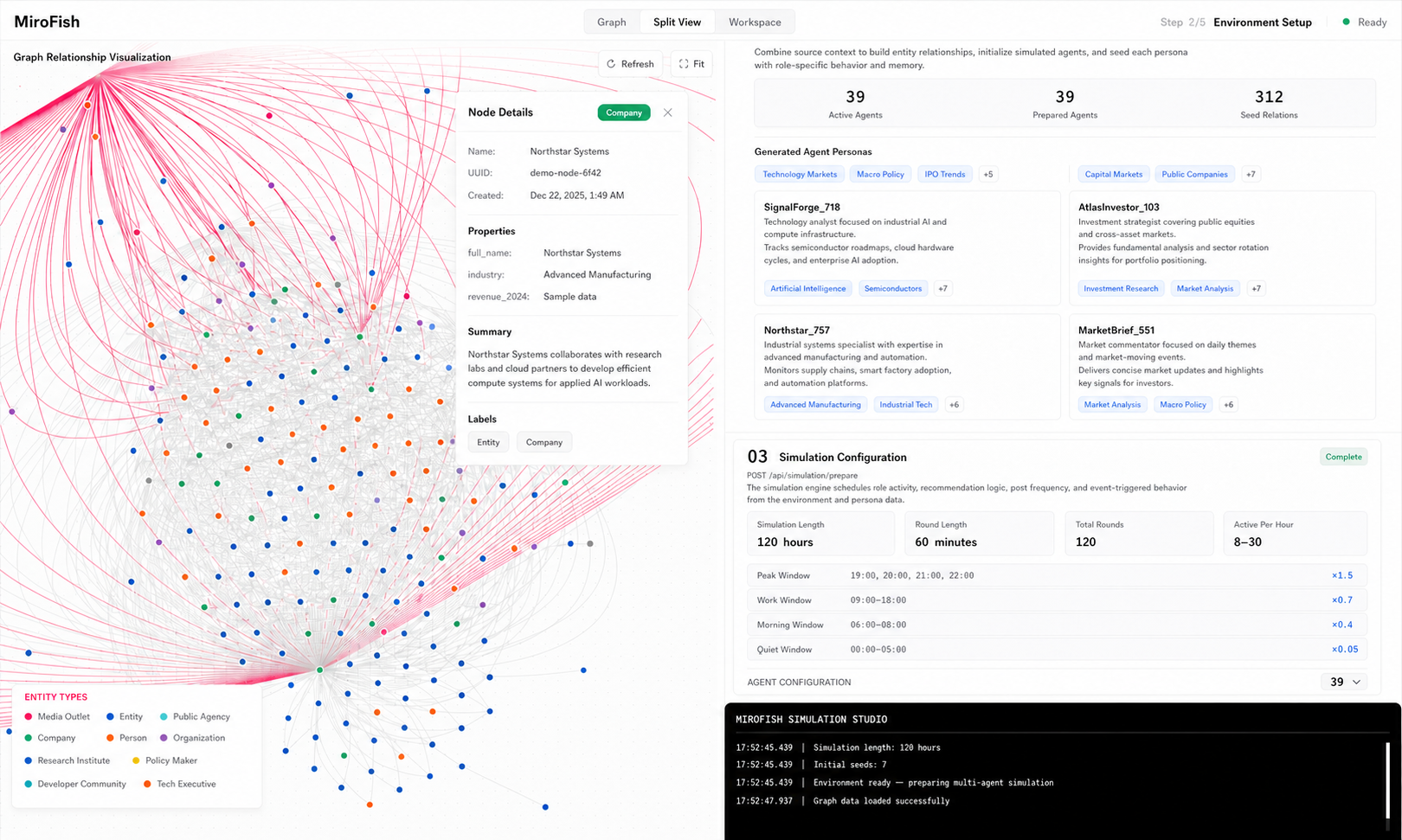
The board below shows the kind of output a MiroFish lottery run can organize for a Powerball Prediction for Today report: frequency labels, quick explanations, and a simulation card that keeps the boundary visible.
Use these labels as a readable format for your own official draw history. They are sample entries for interface demonstration, not a claim about the next result.
A simulator can make the combination space easier to understand, but it cannot turn a random draw into a certain forecast.
Plain boundary: a Powerball number set is a possible combination, not a forecast. Use the simulator for entertainment, record-keeping, and probability literacy.
The MiroFish workflow is useful when a Powerball Prediction for Today page needs more than a random number button. It can organize source notes, draw-history tables, simulation settings, and a careful report that never claims certainty.
| Step | Simulator output |
|---|---|
| 1. Collect | Use official draw history if you choose to paste it in. Keep source notes separate from the generated sample set. |
| 2. Label | Mark hot, cold, balanced, odd-even, and low-high spread as descriptive labels only. |
| 3. Simulate | Generate random valid combinations inside the 5 white ball and 1 red Powerball format. |
| 4. Explain | Attach a probability note, independence reminder, and budget caution to each output. |
| 5. Review | Let the user compare samples without telling them any set is more likely to win. |
The embedded tour is loaded from this site and shows the product pattern this homepage adapts: source material, graph building, agent setup, simulation, and a reviewable report.
The value is not the claim that a number will win. The value is the structure: valid ranges, visible assumptions, a plain-language spread review, and a reminder that random drawings cannot be controlled.
| Report part | Visitor value | Safe wording |
|---|---|---|
| Number set | Gives a clean, valid sample combination. | "Here is a randomized sample set." |
| Frequency note | Helps compare sample labels without claiming future influence. | "This describes past or sample data only." |
| Spread check | Shows whether the set is clustered, balanced, odd-heavy, or even-heavy. | "A spread check is for review, not certainty." |
| Risk boundary | Keeps the user from mistaking simulation for an advantage. | "Every valid combination remains random." |
No. Powerball drawings are random. This page generates valid sample combinations and explains probability limits, but it cannot know or improve the actual result.
They are useful for describing a dataset, spotting clustering, and making the report easier to read. They are not evidence that a future draw will favor any number.
No. It is an independent simulation page. Always use official lottery sources for rules, purchase availability, draw times, results, and responsible play information.
Treat it as entertainment and a way to understand combinations. Set a budget first, never chase losses, and skip the game if playing would create pressure.
Generate a valid sample combination, review the spread, and keep the probability note attached to the result. That is the point of a responsible lottery simulator: clear output, clear limits, and no claim that a random draw can be guaranteed.